Office Burst Pipe Repair
Office Plumbing
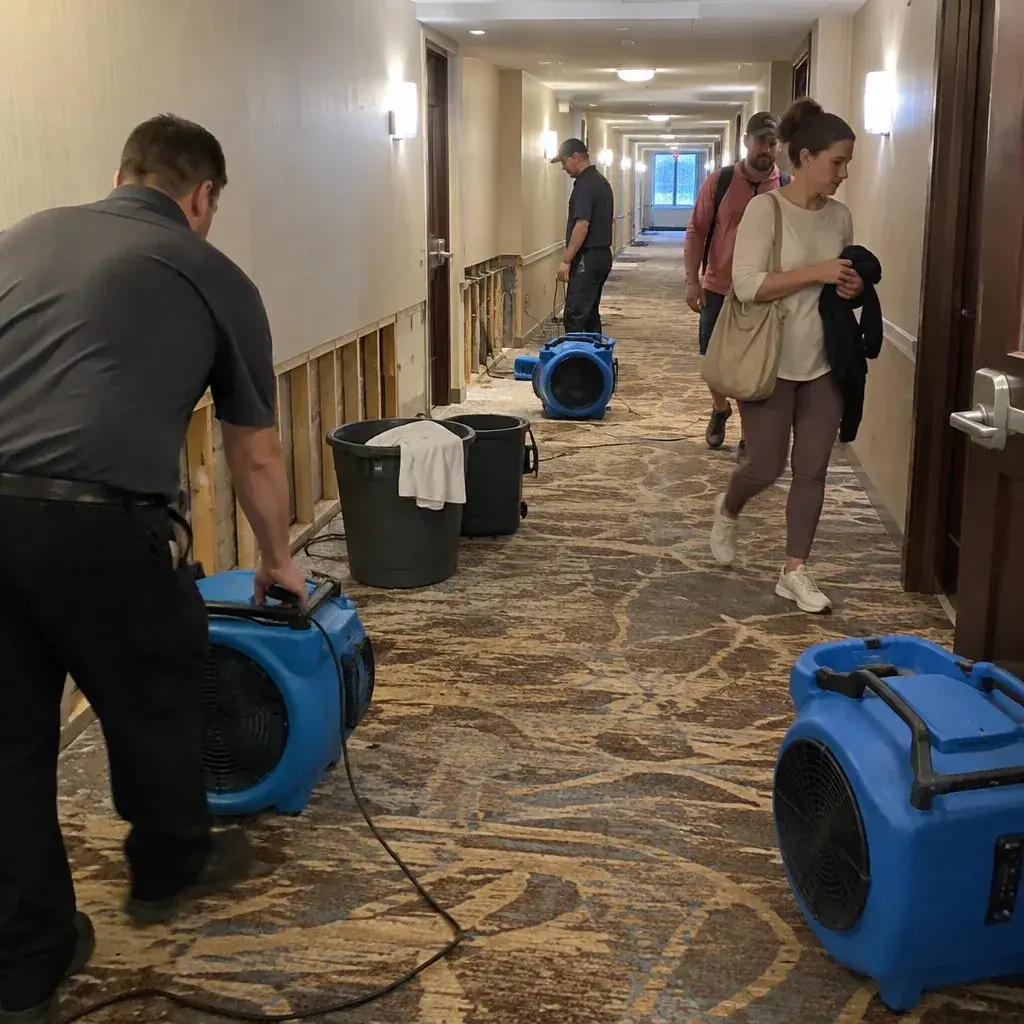
A burst line can affect guest rooms and shared services; clear access plans and repair records help hotel teams coordinate the work.
A hotel can limit disruption by identifying affected rooms and shared lines, arranging access with staff, and planning isolation around operations. The plumber repairs the damaged section, checks water flow and leaks, and records photos and work details for the hotel’s maintenance handoff.
On the day a guest reported a ceiling stain in a Nampa hotel, staff may have found water far from the pipe that failed. A burst is a split in a pressurized supply line, and water can travel before showing on a wall or ceiling. The repair plan has to connect the room report to the affected line, then record what the plumber found and changed. Clear room references, access notes, and photos help operations staff follow that path without losing track of the work.
For hotel burst pipe repair, begin the building assessment with the affected room numbers, visible symptoms, access limits, and maintenance contacts. A report that says “wet ceiling” leaves open whether the source is above that room, along a shared run, or elsewhere. A simple room list and floor plan can help the plumber and facilities contact compare reports with pipe routes. In Nampa, staff can also note which spaces are occupied or unavailable, so the assessment can be coordinated with room access and guest communication.
The useful record follows the work from first report through return to service. Note who reported the symptom, which rooms or shared areas were affected, what access was granted, and which water line the plumber assessed. Add the repair method, compatible parts used, and the check performed before water service resumed. These details give the next shift a reliable account instead of a string of verbal updates. Keep guest information out of general maintenance notes; room identifiers and operational facts are enough to track the repair.
A hotel’s room numbers, risers, and service areas give the assessment a working map. Staff can mark where water appeared and whether nearby rooms or common areas reported similar signs; the plumber then traces the supply line rather than assuming the visible stain marks the break. A pipe may be exposed or concealed behind a wall, ceiling, or floor, so locating it can require access to the affected area. In Nampa, a facilities contact can help match the reported rooms to the building’s own plans and access rules.
Access planning is part of the repair record because it explains how the plumber reached the damaged section. Record which rooms were available, who arranged entry, and whether a ceiling or wall needed to be opened for pipe access. If the team uses local landmarks to clarify a service address or route, keep those references precise: Bauman Community Pool is in Nampa, while Greenleaf Friends Academy is in Greenleaf. They should identify a location only when they genuinely help the property team coordinate access.
| Room or Area | Pipe Finding | Work Record |
|---|---|---|
| Affected area | Room numbers and shared-system locations | Nampa property reference |
| Observed signs | Leak location and visible pipe condition | Dated photos before work |
| Access details | Rooms entered and access restrictions | Staff contact and access notes |
| Water isolation | Affected valve or supply identified | Operational areas affected |
| Pipe details | Material, size, and damaged section | Photos showing exposed pipe |
| Repair work | Section replaced and compatible fittings used | Completed-work photos and notes |
| Repair check | Leak check and water-flow confirmation | Check results for maintenance records |
| Room status | Return-to-service decision and open items | Staff handoff for affected rooms |
A supply line can serve more than the room where water first appears, so the plumber needs to identify what the affected valve or line controls. Before isolation, the facilities contact can share operating constraints, such as room access windows and which staff need notice if a water service will be interrupted. The plumber assesses the line and plans the work around that scope. Shut off water only when the valve is safe to reach and operate; avoid wet areas with electrical hazards or unsafe access.
A written isolation note helps staff understand the boundary of the work. It can identify the line or valve the plumber assessed, the rooms or services affected, and the contact responsible for coordinating access and updates. Avoid recording assumptions as confirmed facts: the plumber should verify which rooms share the line and what the shutoff controls. In Nampa, a hotel can use its own operations log to share that verified scope across shifts, while keeping the repair details tied to the specific incident record.
The record should distinguish plumbing work from repairs to the room itself. Burst pipe repair addresses the damaged water supply pipe and checks the plumbing; water extraction, drying, and rebuilding may require a separate provider. Note any opened finish or visible water impact, then identify which items remain outside the plumber’s scope. This boundary helps a manager route follow-up without suggesting the pipe repair also restored a ceiling or room. It also makes clear what must be reviewed before staff consider an affected space ready for normal use.
Photos make repair notes easier to interpret when they show the damaged section before work, the connection or replacement after work, and the surrounding access area. Include a room or service-area reference and a brief caption so images do not become detached from the incident. Capture pipe material and the fitting area when visible; copper, PEX, and other systems require compatible repair methods. In Nampa, a dated sequence in the property’s maintenance record can help a later reviewer distinguish the plumber’s work from separate finish restoration.
A useful repair note names what gave way, where the break was found, and how the damaged section was addressed. The plumber may replace that section with compatible pipe and fittings, or use another suitable repair based on the material, access, and surrounding condition. Record the parts and connection type rather than writing only “fixed.” A note that the repair was checked for leaks and water flow confirms what the plumber verified. Photos support the written account, but should not substitute for the repair details.
Return-to-service documentation closes the plumbing record: note the repaired area, the leak check, and whether water flow was confirmed. The plumber should check the repaired section under water pressure before an opened area is closed. Staff can then track any remaining room or finish work separately and record who determines when the space returns to use. This sequence gives a manager a clear handoff between plumbing completion and room readiness, without treating those as the same decision or implying that drying and rebuilding were included.
Keep the incident record easy to retrieve by linking the room report, assessment notes, photos, repair details, and return-to-service check under one property reference. If work involves plumbing in Idaho, the applicable licensing law and permit process depend on the specific scope and jurisdiction; confirm those requirements for the repair. The record can note what was confirmed without making a blanket claim about permits. For a Nampa property, that gives the facilities team a practical trail for maintenance review and any follow-up coordination.
When you arrange a building assessment, gather affected room numbers, access restrictions, visible symptoms, and the maintenance contacts who can coordinate entry. A facilities contact can also point out relevant building plans and known service areas, while leaving the pipe location for the plumber to verify. If hotel staff refer to local places such as Kuna Arts and History Center, use the reference only to clarify a real route or property location. Accurate context helps the pros we connect you with plan the assessment and document what they find.
A complete handoff leaves the next staff member able to answer what was affected, where the break was found, what repair was completed, and what plumbing checks were recorded. Keep that account separate from any open restoration work, and update it if a later assessment changes the known scope. In Nampa, this kind of hospitality plumbing record can support maintenance continuity across shifts and help managers coordinate rooms based on verified repair status. It turns a disruption into a traceable work history that staff can review without guessing.
A clear work record helps hotel staff decide which rooms can return to service and gives the next shift a reliable handoff. For a Nampa property, note the affected room numbers, the supply line or shared system involved, access limits, and who authorized the work. Add dated photos of the pipe before and after repair, plus the materials used and the plumber’s leak-check findings. Keep guest details out of images. If drying or finish work follows, record that separately so the plumbing repair and room-readiness decisions remain easy to track.
Coverage depends on the address, so share your location when you ask about service; the pros we connect you with can clarify which communities are included, includingMeridian, Eagle and Nampa. Before scheduling, ask the pros we connect you with for a repair estimate and whether a visit charge applies.
For a commercial building, the estimate often starts with a visit to locate the break and assess the pipe. The inspection can also note the condition of nearby pipe sections. Additional visits may change the cost.For a Nampa business, larger lines or longer damaged sections can call for different pipe and fitting sizes, changing the parts list and estimate. When you call, describe where water appeared, whether the pipe is accessible, and what the line serves. Ask what locating and repair cover.Use the pricing guide to review repair cost factors; the commercial overview explains what shapes assessment of a commercial burst pipe repair.
Office Plumbing
Multifamily Plumbing
Before arranging an assessment, collect the affected room numbers, visible symptoms, and any access limits, such as escort or key requirements. Tell the plumber which rooms share the area or water service, and provide the maintenance contact who can coordinate entry and approve work. In Nampa, those details help the pros we connect you with plan the building assessment around hotel operations and keep staff working from the same information.
A plumber can review the affected rooms and trace the line serving them, including whether it also supplies a shared area. The hotel can identify access windows and tell staff which rooms or facilities may be affected while the line is isolated for repair. Once the damaged section is addressed, the plumber checks the work and confirms water flow; staff can use that update to coordinate room status.
Keep a work order with the affected room or asset, the observed damage, dated photos, and a summary of the repair performed. Record the materials installed and the plumber’s findings when water is restored and the repair is checked. For a hotel near Lakeview Park, staff can also note a useful arrival landmark alongside the property access instructions. Avoid including guest names or personal belongings in photos.
Have the maintenance lead record which rooms and shared services were involved, who received the repair update, and what checks were completed before staff changed room status. The plumber’s notes can document the damaged pipe and completed work; hotel staff can then add their own operational handoff. Keep any drying or finish-work records with that separate work order so responsibilities remain clear.
Gather room numbers, access limits, symptoms, and maintenance contacts before arranging a Nampa building assessment and repair record.
Call +12084868147